
Could a CBD cream help ease arthritis discomfort? The evidence is promising but still limited, so it’s best to treat it as a possible add-on, not a cure or replacement for care. When assessing a CBD cream for arthritis, start with the ingredient list, the lab report and clear directions for use.
We analyzed 28 YouTube comments about CBD cream for arthritis and found that 57% mentioned significant pain relief.
What CBD Cream Is and How It May Affect Arthritis Symptoms
CBD cream is a topical product made with cannabidiol, a compound found in cannabis. You rub it onto the skin near a sore joint. Unlike an oil or capsule, it’s meant for local use. A cream’s ingredients and strength can differ, so the name alone doesn’t tell you how much CBD is in each application.
CBD is non-intoxicating on its own. That means it doesn’t cause the high linked with THC. But full-spectrum extracts can contain some THC, so check the product’s THC details rather than assuming every CBD topical is THC-free.
Researchers are studying how CBD may affect pain signalling and inflammation. The body’s endocannabinoid system is involved in both, and some research suggests CBD can affect pathways tied to these processes. The exact way it works in human joints is still being studied.
Animal studies can offer early clues, but they don’t prove a topical will work for people. The effects of a shop-bought cream may differ. Read the related research with that limit in mind.
A topical may appeal if discomfort is in one spot, such as a hand or knee. It won’t treat the cause of arthritis or replace prescribed care. You can also read CBDNorth’s overview of CBD and arthritis pain before discussing options with your care team.
Topical CBD and Arthritis
The research picture is mixed but worth following. Animal studies suggest that CBD applied near a joint may affect inflammation and pain responses. Human studies are fewer, and the trials available so far are small or short. Researchers also use different products, which makes it hard to know whether results apply to the cream you’re considering.
A small controlled trial looked at CBD balm for basal thumb-joint arthritis. Eighteen people used CBD balm and a balm without CBD in separate treatment periods. The trial reported lower pain and disability scores during CBD use, with no adverse events reported. Its size and short duration mean the finding needs more study before it can guide routine treatment.
Clinical evidence for symptom relief remains limited. Studies also use different doses and products, so results from one formula can’t be assumed to apply to another. These research evidence gaps are worth keeping in mind.
There’s a key difference between osteoarthritis and inflammatory arthritis such as rheumatoid arthritis. A cream might be considered for local comfort, but it doesn’t control the immune process or prevent joint damage. Don’t stop or change disease-modifying treatment because a topical seems to help. Ask your doctor or pharmacist about using it alongside your current plan.
So far, research supports cautious interest, not a firm promise of relief. If you try a topical, track what changes in your daily function, such as gripping a mug or walking up stairs. A short note can help you and your clinician judge whether it’s worth continuing.
How to Assess CBD Cream Ingredients, Spectrum and COAs
Start with the label. Check the total CBD amount in the container, the amount of THC if stated, the full ingredient list and the directions. Total milligrams tell you what’s in the whole jar, not necessarily how much you’ll apply each time. If the label gives no way to understand the amount per use, comparisons between creams become harder.
Next, note the extract type:
- Full-spectrum contains CBD along with other hemp compounds. It may include trace THC.
- Broad-spectrum contains multiple hemp compounds, with THC removed according to the product’s formulation.
- CBD isolate is CBD separated from the other hemp compounds.
Some people choose full-spectrum for its wider mix of plant compounds. Others prefer isolate or broad-spectrum to avoid THC. The idea that cannabinoids and other plant compounds may work together is often called the entourage effect. It remains a proposed benefit, not a guarantee of better arthritis relief.
CBDNorth Topicals lists organic full-spectrum hemp extract and MCT oil as its two active ingredients. A short ingredient list can make a formula easier to assess, but it doesn’t prove that it will suit your skin or ease your symptoms.
A Certificate of Analysis, or COA, is a lab report for a specific product batch. Look for a report that matches the batch or lot on the package. Check that it reports CBD and THC levels. See whether it also tests for contaminants such as pesticides, heavy metals or residual solvents. If you can’t connect the report to the product in hand, it’s less useful for checking that batch.
| What to check | What a clear label or report should help you understand | Why it matters |
|---|---|---|
| Cannabinoid content | CBD amount and any stated THC amount | Helps you compare the product’s contents without guessing. |
| Extract type | Full-spectrum, broad-spectrum or isolate | Shows whether other hemp compounds or THC may be present. |
| Other ingredients | Carrier oils, scent ingredients and added actives | Helps you spot ingredients that may irritate your skin or that you prefer to avoid. |
| Batch testing | A COA that matches the product batch | Gives you a way to check the reported contents and contaminant tests. |
For a topical option, CBDNorth’s CBD topicals and creams are one place to review the brand’s range. Compare the label details with your needs, and use the same checks for any cream you consider.
How to Apply CBD Cream and Use It Safely
There’s no established CBD cream dose for arthritis. Research hasn’t set a best strength or schedule, and the amount in one product may not match another. Follow the directions on the product label. Don’t copy a dose from a study and assume it’s right for a different formula.
Before using a new cream widely, apply a small amount to a small patch of unbroken skin. Wait and watch for irritation. If your skin reacts, wash the area and stop using the product. Don’t apply it to broken or inflamed skin unless a healthcare professional tells you to.
Use only as directed. Keep the cream away from your eyes and mouth, and wash your hands after applying it unless your hands are the treated area. If you use other creams or ointments on the same joint, ask a pharmacist whether they can be used together.
Topical use may cause local effects such as dryness, redness or a rash. Stop if these occur or worsen. CBD itself doesn’t cause intoxication, but a full-spectrum cream may contain THC. If you need to avoid THC for work, health or personal reasons, check the COA and ask the maker or a pharmacist about the product.
CBD can interact with some medicines. The risk from a topical may differ from an oral product, but it’s still wise to discuss use with a pharmacist or doctor, especially if you take regular arthritis medicines or several prescriptions. Don’t reduce or stop prescribed treatment on your own.

If you decide to test a cream, write down when you use it and what you can do afterward. For example, note whether opening a jar or buttoning a coat feels easier. That record is more useful than relying on memory alone.
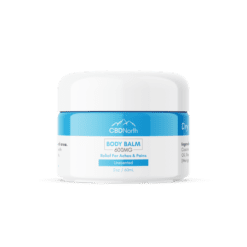
CBDNorth’s CBD Body Pain Balm is a topical option to review alongside its label and testing information. Ready to explore a topical? Browse the product details and check that the formula fits your needs before ordering.
Cost, Coverage and Canadian Rules for CBD Cream
CBD cream prices can vary, and a higher price doesn’t prove a product will work better. Since no single price or standard dose applies across creams, compare what the package contains and how much CBD it provides. If the label gives enough detail, you can work out the cost per milligram. Also consider how often you’d need to replace the container based on its directions.
Don’t judge value by total milligrams alone. A cream with a high total amount may still be hard to compare if the label doesn’t make its CBD content per use clear. Check whether the ingredients suit your skin, whether the product has a batch-linked COA and whether the cost fits your budget for a trial period.
Coverage depends on your plan and the kind of product. Don’t assume an extended health plan will reimburse a wellness topical. Check with your insurer before buying, and ask what documents it needs. Keep the receipt and product details if you plan to submit a claim.
In Canada, rules can depend on the product category and where it’s sold. Check the product’s Canadian label and buy through a lawful Canadian source. A medical cannabis product and a wellness topical may not follow the same route to market. For questions about medical cannabis, speak with a healthcare provider; this resource is not a substitute for advice about a specific cream.
CBDNorth is a Canadian online retailer with Vancouver roots. Its range includes topicals alongside oils and other CBD products. Review the product information before purchase, then ask a pharmacist if you’re unsure how it fits with your arthritis care.
Frequently Asked Questions
Does CBD cream work for arthritis?
CBD cream may help some people with local discomfort, but research hasn’t shown that it reliably treats arthritis. Animal findings are encouraging, and a small human trial reported improvements in thumb arthritis symptoms. Larger studies are needed. Treat a topical as a possible addition to care, not a replacement for prescribed medicine or medical advice.
Can CBD cream make you feel high?
CBD itself is non-intoxicating, so it doesn’t cause the high associated with THC. However, a full-spectrum product may contain THC. Check the label and batch-specific COA if THC matters to you. Don’t assume that every product described as CBD cream is THC-free.
How often should I apply CBD cream for joint pain?
There’s no agreed schedule for CBD cream and arthritis. Follow the directions for the product you have, because formulas and strengths differ. Research doses aren’t a general-use instruction. If the label is hard to interpret, ask a pharmacist before use rather than applying more often or using more cream.
Can I use CBD cream with arthritis medication?
Ask a pharmacist or doctor before combining CBD with regular medicines. CBD may interact with some drugs, and your personal risk depends on the medicine and how you use the topical. Don’t stop or lower prescribed arthritis treatment because you’ve started using a cream.
Will insurance cover CBD cream in Canada?
Coverage depends on your insurer and plan, so check before you buy. Ask whether the plan covers the specific product category and what records it needs for reimbursement. Keep the receipt and product details. Don’t count on coverage unless your insurer confirms it for your situation.
Conclusion
CBD cream may be worth discussing as an add-on for a specific sore joint, but the evidence is still early. Check the ingredients and a batch-matched COA, then ask a pharmacist about medication interactions. If you’re considering a topical from CBDNorth, review its product details before deciding whether it fits your care plan.